The Computational Social Psychology (CSP) Lab, directed by Dr. Almog Simchon at the Department of Psychology at Ben-Gurion University of the Negev, investigates how people form beliefs, interpret information, and engage with political discourse in the digital age. We study the psychological processes that shape how people reason about evidence, whom they trust, and how political discourse evolves. This includes the dynamics of polarization, misinformation, and the growing influence of generative AI on public communication. Our approach combines behavioral experiments with computational methods, including large-scale text analysis and machine learning.
Why do people believe things that are not true? We examine the cognitive and social factors that shape how people evaluate information, why misinformation spreads, and when individuals trust or reject what they encounter online. Our work develops and tests interventions, particularly psychological inoculation, using cognitive modeling to disentangle people's ability to tell true from false information from their general tendency to accept or reject claims.
How do political attitudes form and shift in digital environments? We study the dynamics of polarization, partisan conflict, and political communication by combining behavioral experiments with large-scale computational analysis of political speech, from social media posts to parliamentary discourse. Our work examines how the language politicians use both reflects and shapes democratic norms.
People differ in how they process and evaluate information. We study how individual differences in thinking styles, intellectual humility, and epistemic orientations relate to belief formation, susceptibility to misinformation, and political attitudes, with particular attention to how these tendencies play out in digitally mediated contexts.
Papers in this pillar are currently in the oven — preprints coming soon!
Language provides a window into beliefs and psychological processes that scales. We use computational text analysis, from dictionary-based approaches to neural embeddings, to study how people express beliefs, construct narratives, and engage with political discourse. A growing part of our work examines how generative AI is transforming persuasion, public communication, and information ecosystems.
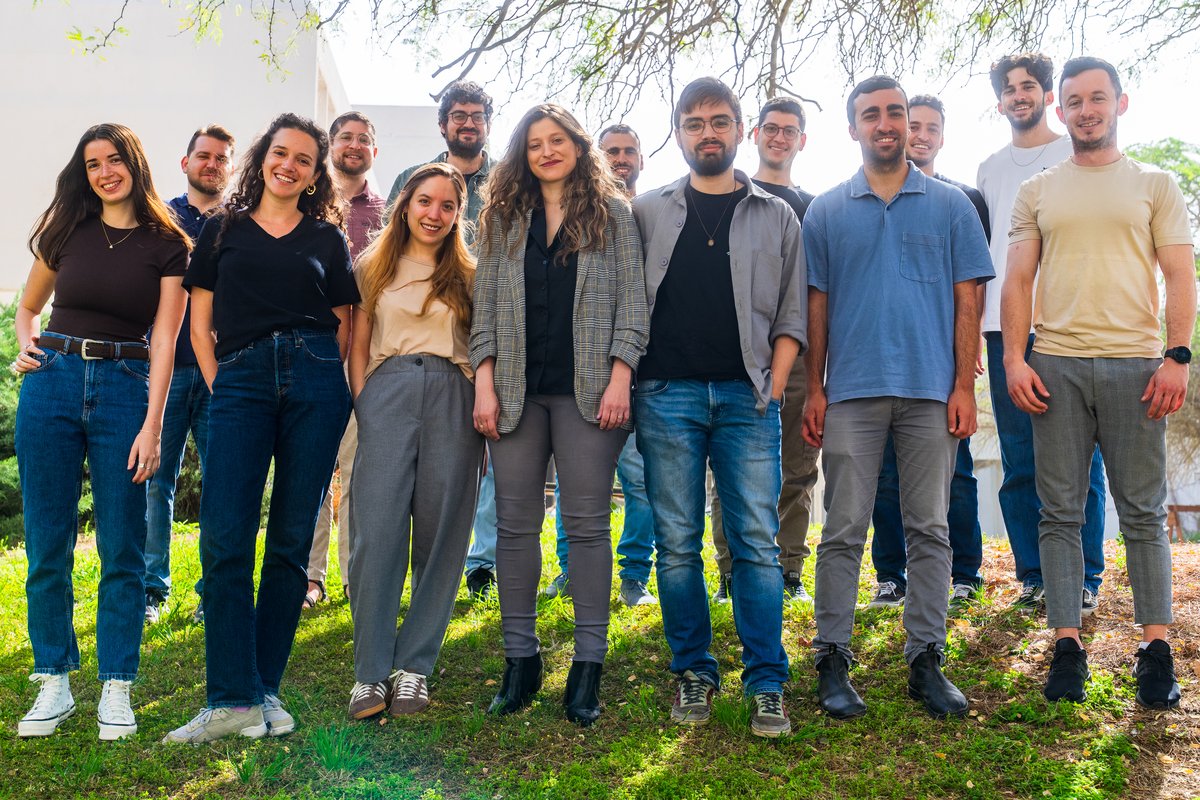
Photos by Nadav Bouktus
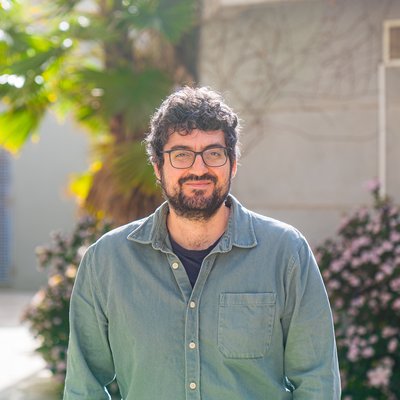
Lab Director (PI) · Assistant Professor
Almog is a computational social psychologist who studies belief formation, political discourse, and information evaluation in digital environments. His research lies at the intersection of political psychology, social media, and language, with a focus on polarization, misinformation, and the psychological implications of generative AI.
Postdoctoral Researchers

Postdoctoral Researcher
Graduate Students

PhD Student

MA Student
MA Student
MA Student

MA Student

MA Student

MA Student
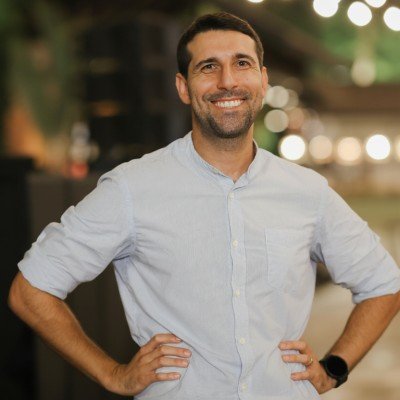
MA Student

MA Student

MA Student
Research Assistants

Research Assistant

Research Assistant
2026
Van der Linden, S., Simchon, A., & Lewandowsky, S. (2026). New research shows cognitive inoculation improves discernment of misinformation. Skeptical Inquirer, 55.
2025
Teitelbaum, L., Saltz, E., Lewandowsky, S., & Simchon, A. (2025). Rhetorical features from social media predict real-world violent outcomes of manifestos. Preprint. [link]
Simchon, A., Zipori, T., Teitelbaum, L., Lewandowsky, S., & Van der Linden, S. (2025). A signal detection theory meta-analysis of psychological inoculation against misinformation. Current Opinion in Psychology, 60, 102194. [link]
Teitelbaum, L. & Simchon, A. (2025). Neural text embeddings in psychological research: A guide with examples in R. Psychological Methods. [link]
Aroyehun, S. T., Simchon, A., Carrella, F., Lasser, J., Lewandowsky, S., & Garcia, D. (2025). Computational analysis of US congressional speeches reveals a shift from evidence to intuition. Nature Human Behaviour, 9(6), 1122-1133. [link]
Hadar, B., Simchon, A., Gilead, M., & Smith, P. K. (2025). Elevated power promotes prosocial behavior more than elevated status. Personality and Social Psychology Bulletin. [link]
Carrella, F., Aroyehun, S. T., Lasser, J., Simchon, A., Garcia, D., & Lewandowsky, S. (2025). Different honesty conceptions align across US politicians' tweets and public replies. Nature Communications, 16(1), 1409. [link]
Carrella, F., Simchon, A., Edwards, M., & Lewandowsky, S. (2025). Warning people that they are being microtargeted fails to eliminate persuasive advantage. Communications Psychology, 3(1), 15. [link]
Smith, F., Simchon, A., Holford, D., & Lewandowsky, S. (2025). Inoculation reduces social media engagement with affectively polarized content in the UK and US. Communications Psychology, 3(1), 11. [link]
Nussinson, R., Ram, H., Simchon, A., Hatzek, A., Navon, M., Dali, A., Shechter, A. et al. (2025). Cold and distant: Bi-directional associations between stimulus perceived temperature and its psychological distance and construal level. Journal of Experimental Social Psychology, 119, 104759. [link]
2024
Simchon, A., Edwards, M., & Lewandowsky, S. (2024). The persuasive effects of political microtargeting in the age of generative artificial intelligence. PNAS Nexus, 3(2), pgae035. [link]
Lewandowsky, S., Garcia, D., Simchon, A., & Carrella, F. (2024). When liars are considered honest. Trends in Cognitive Sciences, 28(5), 383-385. [link]
Simchon, A. & Gilead, M. (2024). A psychologically informed approach to "actuarial" decision making. Decision. [link]
Nussinson, R., Rozenberg, I., Hatzek, A., Mentser, S., Navon, M., Gilead, M., & Simchon, A. (2024). The poetry of psychological distance: Bidirectional associations between stimulus speed and its psychological distance and construal level. Journal of Personality and Social Psychology, 127(1), 58. [link]
Teitelbaum, L. & Simchon, A. (2024). Data science for psychology: Natural language. [link]
We welcome inquiries from motivated students interested in computational social psychology. Opportunities may be available for graduate and undergraduate students, and we are also happy to hear from prospective postdoctoral researchers and collaborators.
If you're interested, contact almogsi@bgu.ac.il with your CV and a brief description of your research interests.
Department of Psychology
Ben-Gurion University of the Negev
Beer-Sheva, Israel
